
Home Care for Someone Living with Parkinson's - Staying Independent at Home


A Parkinson's diagnosis changes things. But it does not have to change everything.
For many people living with Parkinson's and for the families who support them, one of the most important and most fiercely held priorities is staying at home. In the place they know. In the life they have built. With as much independence, dignity and normality as possible.
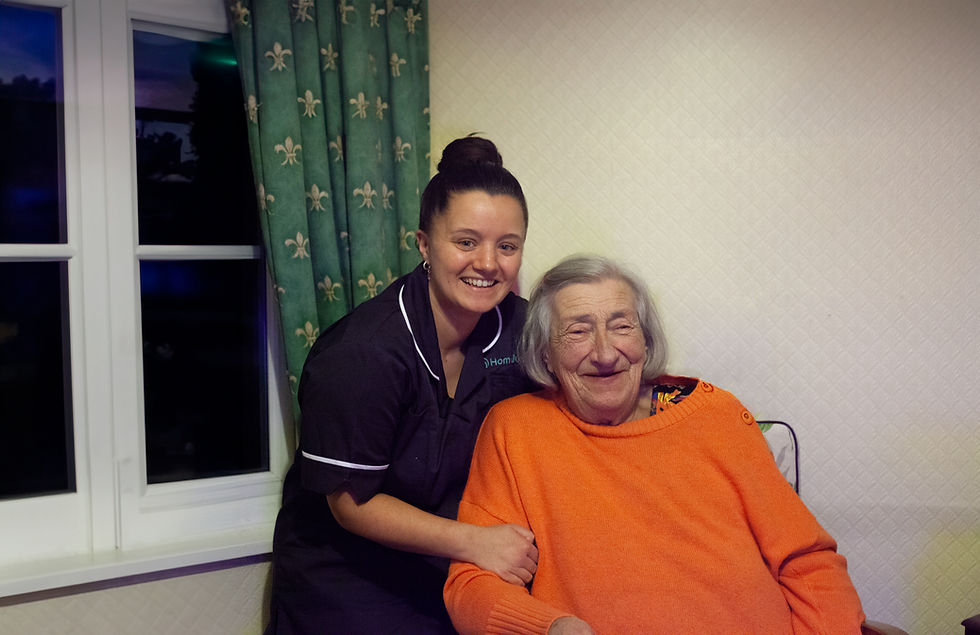
The good news is that with the right support in place, home is not just a possibility for people with Parkinson's, it is, for the vast majority, the best possible environment for them to live well. And professional home care, delivered by carers who understand Parkinson's and who take the time to truly know the person they are supporting, can make an extraordinary difference to quality of life at every stage of the condition.
This guide is for families navigating the early, middle or later stages of a Parkinson's diagnosis, covering what the condition means for day-to-day life at home, how professional care can help and what to look for when choosing the right support.
Understanding Parkinson's — What Families Need to Know
Parkinson's disease is a progressive neurological condition that affects the brain's ability to produce dopamine, a chemical that plays a crucial role in coordinating smooth, controlled movement. It is the second most common neurodegenerative condition in the UK, affecting around 153,000 people.
Most people are familiar with the movement-related symptoms of Parkinson's, the tremor, the rigidity, the slowness of movement. But Parkinson's is a much more complex condition than its physical symptoms suggest, affecting cognition, mood, sleep, digestion, speech and swallowing in ways that have a profound impact on everyday life.
The main symptoms families need to understand:
Tremor- Involuntary shaking, most commonly in the hands, arms or legs, that is typically most noticeable at rest. Tremor is the most recognisable symptom of Parkinson's but it is not present in everyone, and its severity varies enormously between individuals.
Rigidity and muscle stiffness- Stiffness in the muscles that makes movement slow, difficult and uncomfortable. Rigidity can affect the arms, legs, trunk and face, making everyday tasks like getting dressed, turning in bed and facial expression increasingly challenging as the condition progresses.
Slowness of movement- Known as bradykinesia, this slowing of movement is one of the most disabling features of Parkinson's, affecting everything from walking and getting up from a chair to writing, eating and personal care. Movements that were once automatic and effortless require conscious effort and take significantly longer.
Balance and coordination difficulties- Parkinson's affects the body's automatic systems for maintaining balance, increasing the risk of falls significantly, particularly when turning, changing direction or navigating uneven surfaces.
Freezing- A sudden, temporary inability to move that most commonly affects walking, where the feet seem to become stuck to the floor. Freezing is both distressing and dangerous, as it significantly increases fall risk.
Speech and swallowing difficulties- Parkinson's can affect the muscles used for speech, causing the voice to become quieter, more monotone or more difficult to understand. Swallowing difficulties, known as dysphagia, are also common and can affect nutrition, hydration and medication management.
Non-motor symptoms- Fatigue, sleep disturbances, depression and anxiety, cognitive changes, constipation, bladder problems and pain are all common non-motor features of Parkinson's that are frequently overlooked but can significantly impact quality of life and the level of support needed.
Why Home Matters for Someone Living with Parkinson's
For someone with Parkinson's, the home environment is not just a place of comfort, it is a place of safety, familiarity and autonomy that becomes increasingly important as the condition progresses.
The predictable layout of the home, the familiar positions of furniture, the established daily routine, all of these reduce the cognitive load that Parkinson's makes heavier, minimise fall risk and support the sense of control and independence that is so important to wellbeing.
Disruption to routine and environment, whether through a hospital admission or a move to a care home, can be particularly distressing and disorienting for someone with Parkinson's, and can in some cases accelerate the progression of symptoms. Staying at home, supported by the right care, protects against that disruption and preserves the continuity that matters so much.
How Home Care Supports Someone Living With Parkinson's
Parkinson's care at home is not a single, fixed set of tasks. It is a flexible, evolving response to a condition that changes over time, delivered with deep respect for the individual's wishes, their abilities and their remaining independence.
At Homelium, our carers support people with Parkinson's across a wide range of needs:
Personal care- As Parkinson's progresses, help with washing, dressing and personal hygiene becomes increasingly necessary, not because the person has lost their desire for independence, but because the physical challenges of the condition make these tasks unsafe or exhausting to manage alone. Our carers deliver personal care with patience, sensitivity and a genuine understanding of how long things take for someone with Parkinson's, never rushing, never taking over more than is needed and always preserving dignity.
Medication management- Medication is one of the most important and most complex aspects of Parkinson's management. Most people with Parkinson's take Levodopa or other dopaminergic medications that need to be taken at precise times to maintain a consistent level of symptom control, even small delays can cause significant deterioration in mobility and function. Our carers ensure medications are administered correctly and on time, every single time and flag any concerns about side effects or changes in response to the care team and family promptly.
Mobility support and fall prevention- Falls are one of the most serious risks for people with Parkinson's and reducing that risk requires consistent, expert support. Our carers assist with safe movement around the home, support transfers between positions, from bed to chair, from chair to standing and are trained in the use of mobility equipment and transfer aids. They also monitor the home environment for hazards and work with families to ensure that the layout of the home supports safe movement as much as possible.
Meal preparation and nutrition support- Good nutrition is particularly important for people with Parkinson's, supporting energy levels, medication effectiveness and overall wellbeing. Our carers prepare fresh, nutritious meals adapted to any swallowing or chewing difficulties, ensure adequate hydration throughout the day and provide the patient, unhurried support that mealtimes with Parkinson's often require.
Communication support- When speech becomes affected by Parkinson's, communication can become effortful and frustrating. Our carers take the time to listen, genuinely listen, giving the person the space and time they need to make themselves understood, without finishing sentences or making assumptions. That patience and attentiveness is something many families with a Parkinson's diagnosis describe as one of the most important things a carer can provide.
Emotional support and companionship- Depression and anxiety are among the most common and most underappreciated features of Parkinson's, affecting up to half of all people with the condition at some point. The psychological impact of a progressive neurological diagnosis is profound, and the social isolation that can accompany mobility difficulties and communication changes makes it significantly worse. Our carers provide genuine, consistent human connection, conversation, shared activity and the warmth of a familiar, caring presence, that is genuinely protective of mental health and emotional wellbeing.
Overnight care- Sleep is frequently disrupted in Parkinson's, by vivid dreams, involuntary movements, the need for toilet trips and the difficulty of repositioning in bed. Overnight care, either as a sleeping night where a carer is present and available, or a waking night where active support is provided throughout, ensures that nights are as safe and settled as possible and that family carers can rest.
Specialist care as needs progress- As Parkinson's advances, needs become more complex, potentially including support with more significant swallowing difficulties, management of more frequent freezing episodes, greater assistance with mobility and, in the later stages, full personal care and end of life support. At Homelium, our care plans evolve alongside the condition, adapting as needs change so that your loved one always has the right level of support in place.
The Importance of Routine for People with Parkinson's
This cannot be overstated. Routine is not simply a preference for someone with Parkinson's, it is a genuine therapeutic tool.
Parkinson's medications work most effectively when taken at consistent times. Mobility is often better at certain times of day than others and building activities, therapy exercises and personal care around those better periods makes an enormous difference to what the person can achieve and how well they feel. A consistent daily structure reduces the cognitive burden of Parkinson's, supports better medication timing and reduces anxiety and distress.
A Homelium carer, visiting at the same time, following the same established routine, building a genuine understanding of the individual's rhythms and patterns, provides the continuity that makes this possible. And for someone with Parkinson's, that continuity is everything.
Carer Consistency — Why It Matters So Much
At Homelium, we prioritise carer consistency for all of our clients, but for someone with Parkinson's, it is particularly important.
Building a relationship with a new person takes effort and energy that Parkinson's makes more costly. A rotating rota of unfamiliar faces causes anxiety, disrupts routine and requires the person to repeatedly explain their needs, preferences and rhythms to someone who does not yet know them.
A consistent carer, the same person, at the same time, visit after visit, removes that burden entirely. They learn the individual's patterns. They know when the medication is working well and when it is not. They understand what a good day looks like and what a difficult one means. And they become a trusted, familiar presence that the person with Parkinson's genuinely looks forward to seeing.
That kind of relationship does not just make care more comfortable. It makes it genuinely better.
Supporting the Family — Respite Care for Parkinson's Carers
Caring for a loved one with Parkinson's is an extraordinary act of love, but it is also one of the most demanding caregiving roles there is. The physical demands of supporting someone with significant mobility difficulties, the emotional weight of watching a progressive condition advance and the relentlessness of a role that never fully switches off take a significant and cumulative toll.
At Homelium, we understand that the wellbeing of the family carer is just as important as the wellbeing of the person with Parkinson's, because when the carer is exhausted, overwhelmed or unwell, the whole care arrangement is at risk.
Respite care, where a Homelium carer steps in to provide cover for a period of time, gives family carers the breathing space they genuinely need. Whether it is a few hours a week, a regular daily slot, or cover for a holiday, respite care is one of the most important and most underused forms of support available to Parkinson's families.
Useful Resources for Families
Parkinson's UK — the leading charity for people with Parkinson's in the UK, with a helpline, local support groups and a wealth of practical and emotional support resources
📞 0808 800 0303 (free helpline)
NHS Parkinson's disease information
Parkinson's Excellence Network — connecting Parkinson's specialists, researchers and people with Parkinson's to improve care standards
How Homelium Supports People Living with Parkinson's
At Homelium Care, we provide specialist Parkinson's care across Essex, West Sussex, Dorset, Hampshire and Northamptonshire, delivered by carers who are trained, experienced and genuinely passionate about supporting people with Parkinson's to live as well as possible at home.
Every care arrangement starts with a free, unhurried assessment, a conversation about your loved one as an individual, their diagnosis, their current abilities, their daily routine and what matters most to them. We then match them with a carer who is right for them, not just in terms of skills, but in terms of personality and the kind of relationship we believe will genuinely flourish.
Every new client receives a free care assessment and 2 hours of complimentary home care, giving families the chance to experience what Homelium is really like before committing to anything.
If you are supporting a loved one with Parkinson's and would like to find out more about how Homelium could help, please do not hesitate to get in touch. Our friendly team is always here for an honest, no-pressure conversation.
Call directly on 0333 3448 677 or click here to fill out a contact form for one of our team members to contact you!


Comments